Why Do Small Stores Need Their Own Grocery eCommerce Platform for Growth?
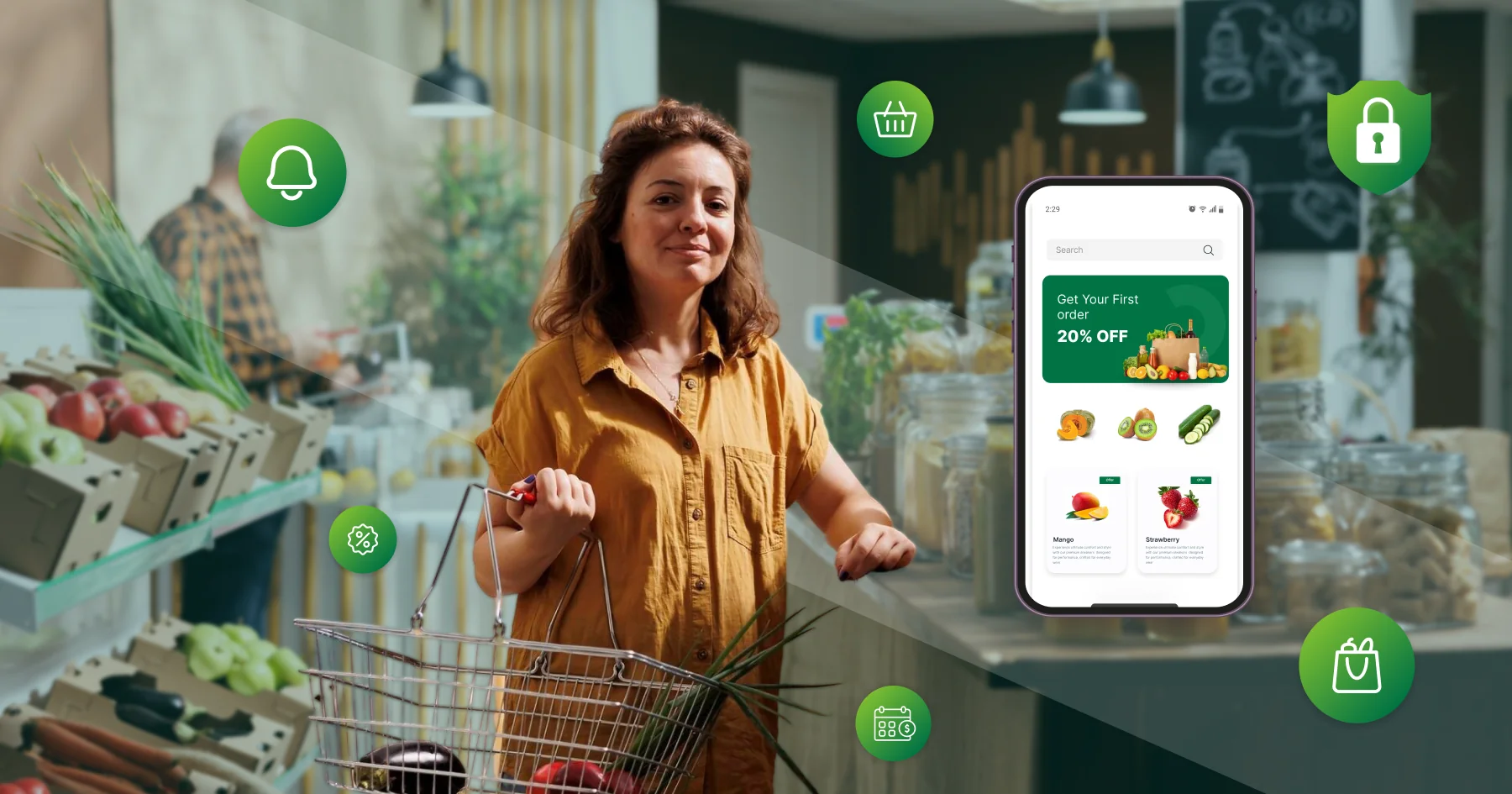
With the accelerated retailing momentum of the last few years, digital upgradation is no longer an option for small grocery shops, but the voice of the hour to grow and survive in the market.
While the majority of the small grocers begin with third-party marketplaces so that they can reach that much closer to the buyers, it would be a tradeoff on profitability, consumer relationships, and management control.
To ensure success in the long term, small businesses should own their Grocery eCommerce Platform, and not depend on a third-party. It will help grocers to grow their business operation entirely by their own control, which further gives power to deliver better customer experience, and growth strategy entirely at their disposal.
This article will discuss why independent retailers need their own websites, why revolutionary grocery solutions will revolutionize the company, and how revolutionary grocery retail tech solutions such as Grocerzy allow digital transformation for grocers to grow without brand loyalty loss.
The marketplace dependency has potential and limitations
The majority of independent stores start their online lives on bestseller marketplaces or delivery aggregators. They provide direct customer access at little up-front technology or marketing expense.
The marketplaces “bring orders, but without a direct channel, your store loses margin, control, and customer loyalty.”
However, marketplaces have some drawbacks:
1. High Commission Fees and Margin Erosion
Platforms are also said to be charging humongous commission charges on the razor-thin margins that exist in the stores. In addition to the grocery business whose margins by their nature have a tendency to remain thin. The grocery stores survive on the platform at the cost of profitability.
2. Limited Brand Visibility and Control
With a consumer economy, there are anonymous lists of stores where many stores compete with each other. Stores lack the power to manage differentiated products, determine product placement, and manipulate price perception and thus constrain differentiation and brand image.
3. No Customer Ownership of Data
Marketplaces have customer data such as purchase history, contact details, and interests. Grocery stores cannot engage with customers or target based on aim-based targeting, and thus long-term loyalty cannot exist.
4. Operational Restraints
Marketplaces have control over delivery choices, order pickup and fulfillment, and even return options. Supermarkets do not have ordering control over perishables, alternates, or time-critical shipments, and this can eventually harm satisfaction for customers.
We at Grocerzy help those small stores who attempted to remain afloat on marketplaces alone had their margins erode by 10–15% and weren’t able to drive repeat buys with visibility of their brands. Our ready-to-use platform is capable of growing their business without expanding their budget.
With us they don’t need to create your ecommerce website for grocery store or app from scratch, we will help them to launch their store within a few weeks just by adding their requirements in our pre-built templates so they can launch the store and be digitally available with the minimum time.
Strategic Change: Your Own Digital Grocery Solution
In order to move beyond the constraints of third-party marketplaces, small supermarket shops need to build their own grocery ecommerce platform. Then they can have full control over operations, marketing, and customer experience. The advantages of a proprietary platform are:
- Increased Profit Margins: No longer third-party charges keep more net revenue per order.
- Full Price and Promotion Control: Traders have complete freedom to offer discounts, loyalty programs, and promotions without anyone interfering.
- Customer Management Data: One-to-one offerings, suggestions, and ongoing dialogue are attainable through direct management of purchasing behavior.
- Brand Uniqueness: Product offerings can be tailored at the individual store level, proprietary fashion can be utilized, and customer experience can be designed to enable differentiation.
- Operational Simplicity: Substitutions, pickup time, and delivery time are operator-managed based on operations.
Based on the recent, estimation independent stores with an owned channel have successfully redirected 15–20% of their market place orders to direct platforms in a few months, a physical value of ownership.
Digital Grocery Growth: Market Trends and Insights
The digital grocery market is growing and is an excellent opportunity for small grocers to establish direct channels. Digital grocery sales were around 13.2% of the United States’ grocery sales in Q3 2024.Increasingly, grocers now plan to augment digital presence via the help of analytics, mobile apps, and customer-orientated platforms in the hope of competing on a level playing field with the large-box retailers.
Independent grocers with their own platforms are well-placed to maintain customers, increase order frequency, and reduce marketplace-enabled sales dependency.
These findings reveal that small grocery stores embracing digital transformation are likely to gain high levels of growth in online purchases with most business commitment and business success.
The Key Characteristics of a Successful Grocery eCommerce Platform
Using an independent grocery ecommerce platform, there are particular aspects of the grocery market that must be addressed, which are directly contradictory pretty different from conventional retailing:
Real-Time Inventory Management
Fresh products, fruits, and dairy products need to be properly tracked and automatically re-ordered not to expire or over-sell.
Flexible Fulfillment Options
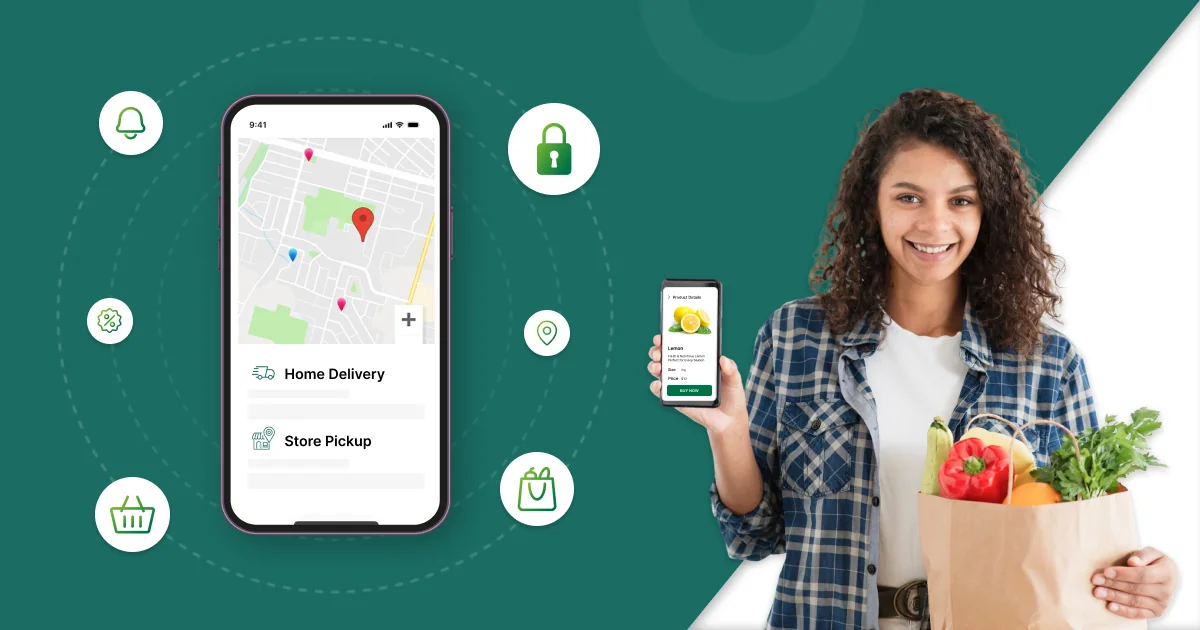
With the flexible alternative delivery options like home delivery, curbside pick-up, and time slots, the grocery delivery app is a saviour for the end-users. It helps to increase customer convenience and aid operational efficiency.
Substitution and Out-of-Stock Management
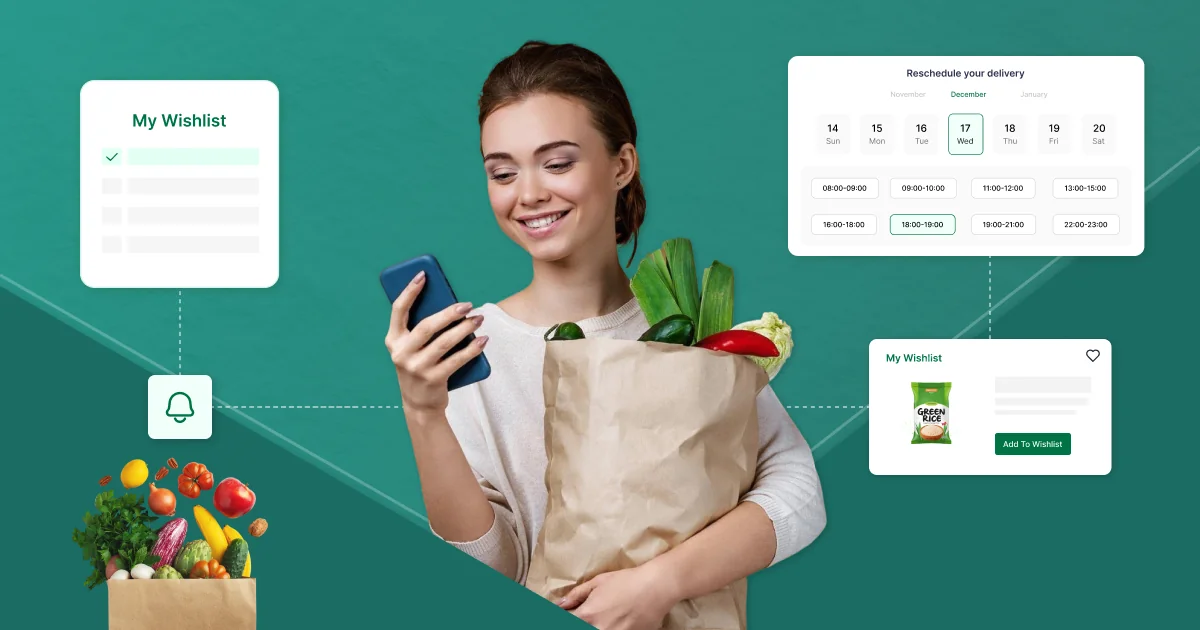
Automated rules of substitution offer out-of-stock alternatives to customers to prevent frustration and cart abandonment.
Staff and Customer Integrated Apps
Delivery apps, picker apps, and customer apps facilitate easy working and improved customer experience.
Promotions and Loyalty Management
Dynamic promotions, loyalty promotions, and reward to members drive repeat purchase and average order value.
Advanced Analytics
Customer behavior analysis, order trend analysis, and product performance analysis enable fact-based decision-making and hence optimize marketing and inventory planning.
Seamless User Experience
Search optimization, shallow product categorization, and mobile-first design enable one to shop hassle-free, and the secret to customer loyalty is that.
All these are plug-and-play functionality in a product such as Grocerzy, and therefore small retailers would be more than happy to have it as a means to have an excellent online presence.
Grocerzy: Enabling Small Retailers to Expand Online
Grocerzy is a groundbreaking grocery tech platform for retailers where small stores can create brand sites and mobile applications within seconds. Some of the key features include:
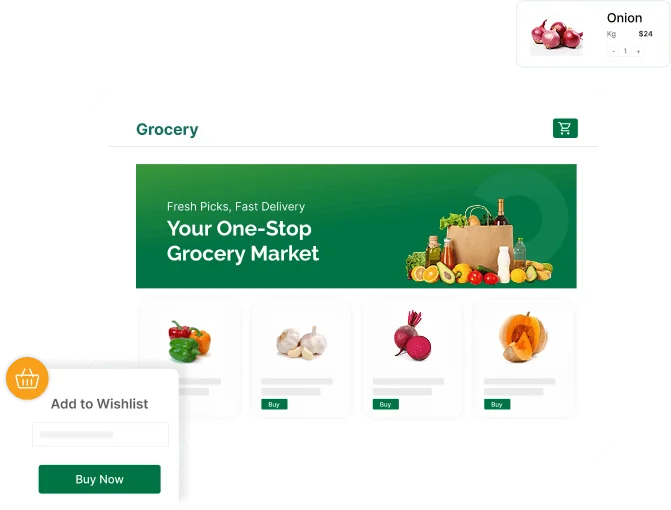
- Branded Storefronts: Easy-to-navigate, multi-store enabled, branded websites.
- End-to-End App Solutions: Customer, picker, and delivery agent apps and centralization of the dashboard.
- Operational Automation: Automatically update stock, process orders, and track real-time deliveries to reduce efforts and errors.
- Customer Engagement Platforms: Push, loyalty card, and offer drive and enable repeat buy. Scalability and Integration: Backend integration, payment gateway, and multicurrency are the cornerstones of scalability for small stores.
A sample best practice
Grocerzy assisted Chandrana Supermarket in launching a geofenced branded grocery ecommerce app and website with inventory management, loyalty, and AI-powered suggestions. This provided enhanced operating effectiveness as well as enhanced customer experience.
Applying a Multi-Channel Growth Model
Grocers can adopt a sequential model of developing a digital channel:
Establish Marketplace Presence While Developing Direct Channels
Redirect marketplace consumers to your website over a period through in-store promotion and incentives.
Simplify Targeted Promotions and Rewards Programs
Offer special promotions or discounting to target customers and stimulate order frequency and activity.
Flexible Pickup Delivery
Take advantage of pickup and delivery availability, real-time updating of inventory data, and rules of smart substitution to offer service consistency.
Drive Business Decisions from Data
Track purchasing habits, choose bestsellers, handle inventory, and create targeted marketing.
Branding and Brand Visibility
Use appropriate social media strategy and platform, impactful content marketing, SEO strategy, and local promotions to brand the platform and onboard new consumers.
At Grocerzy, we recognize that incremental movement by a few percentage points away from marketplaces to channels under control significantly boosts profitability, customer loyalty, and manager control.
Challenges of Digital Transformation Overcome
It might not be simple for small grocers to make a transition to their own platform:
- First-Off Basis and Technical Competence: All such platforms like Grocerzy enable easy deployment of grocery ecommerce sites by small grocers with zero or trivial investment in infrastructure.
- Customer Acquisition and Retention: Incentivized promotion marketing, rewards schemes, and direct contact enable easy customer acquisition and retention.
- Operational Logistics: Order fulfillment automation, management of inventory, and employee training enable easy operations.
- Being Competitive: Ongoing innovations, promotions, and launch of new features ensure competitiveness with others in the stores.
Why the Time Is Right for Small Grocers
There are several reasons that it’s time for small grocers to bet on digital channels:
- Growing Digital Grocery Penetration: Digital supermarket retailing is growing at a slow rate with digital sales 13.2% of total grocery sales during Q3 2024.
- End-Consumer Demand for Omnichannel Experience: Consumers want brands to be personalized, convenient, and consistent.
- Ease of Technology Accessibility: It is cheap and simple if pre-configured and thus digitalization is an easily comprehensible module for small grocers.
- Control of Margins Regardless of Financial Stress: Channel ownership gives control of margins and price.
Future of Grocery Business For Small Retailers
The future prospect for the small supermarket shops is digital transformation with independent channels. Having a branded ecommerce platform or grocery marketplace development platform enables the small shops to:
- Accrue maximum profit margins without third-party commission charges.
- Have sole discretion over price, promotion, and operating policy.
- Have direct customer relations and sell on a fact basis based on data.
- Offer seamless fulfillment, mobile convenience, and reward schemes.
Conclusion
The small grocery retailers most of the time struggle to get a feature-rich store. At Grocerzy, we provide these standalone grocers with end-to-end solutions for launching online grocery store platforms, site packages, websites, apps, and operations tools all together in one system.
Independent retailers are empowered by a strategic shift to a digital grocery solution, increase customer loyalty, and position themselves for long-term growth.
The move from reliance on the marketplace and towards one of control is not a deliberate strategy, it is the magic by which digital grocery can be strong, viable, and profitable in an era of intensified competition.
For better understanding connect with our experts and expand your small grocery retail store with ease.

Jaydeep
👋 Hello! I'm Jaydeep , passionate about driving innovation and transformation in Digital Commerce, Digital Transformation, User Experience, E-commerce, Adobe Solutions, and Apps. I'm on a mission to help organizations thrive in the digital age for Grocery Solutions.