E-Grocery Trends 2026: What’s Shaping the Future
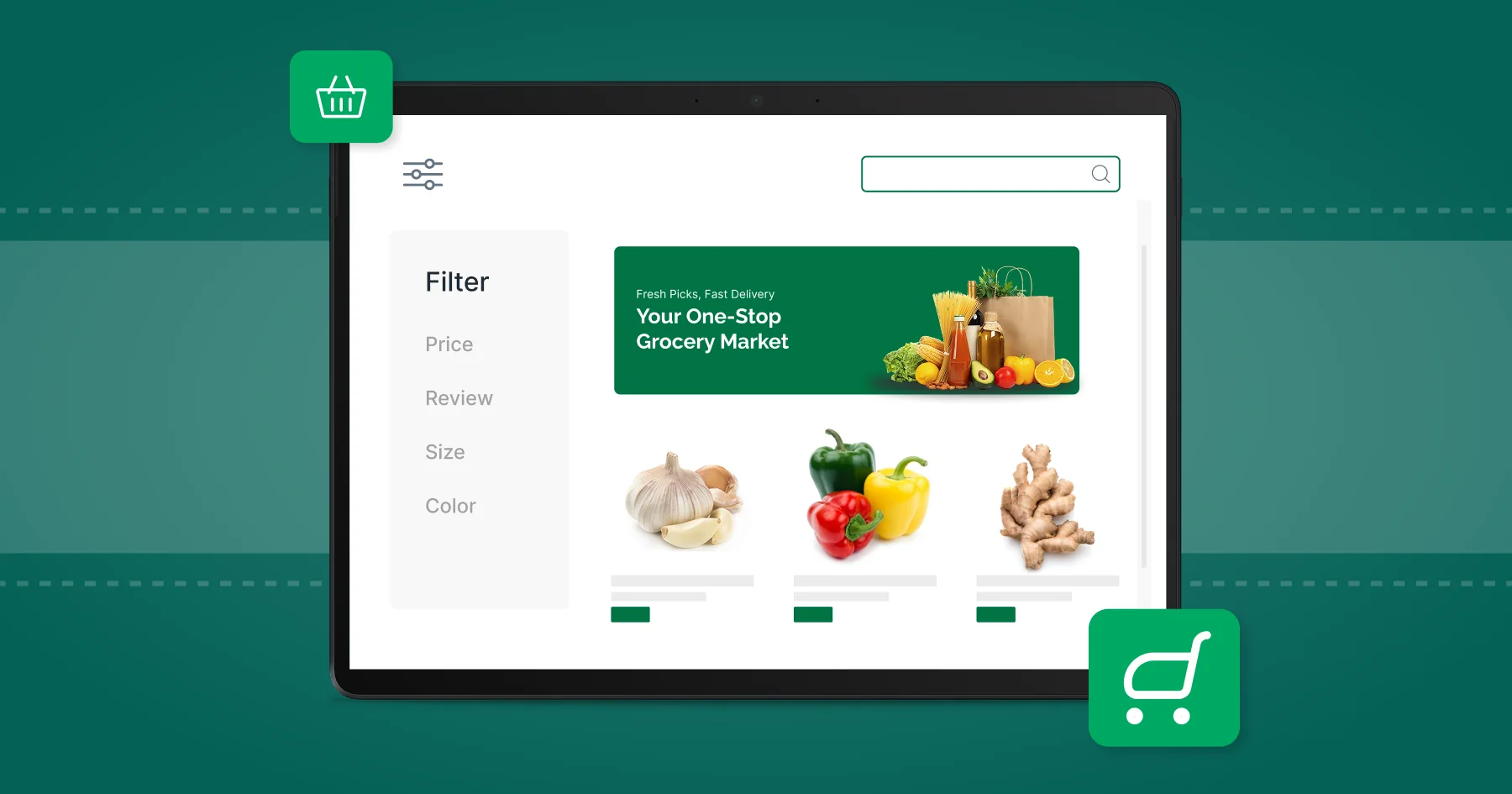
The global grocery business has been changing over the last few years. The shift to online from in-store grocery shopping proved to be a permanent feature in consumer behavior.
Where retail and technology partners contest each other for speed in offering frictionless, effective, and personalized experiences by means of modern grocery store ecommerce website, convenience meets intelligence.
Driving the transformation in the e-grocery sector in 2026 will be innovation related to fulfillment, sustainability, AI, and customer engagement.
In this blog, we take a closer look at some of the biggest trends driving digital revolution, and how forward-thinking brands set the bar for modern grocery retail.
Overview of Rising E-grocery Industry Trends
Online groceries are being adopted fast across the world. According to Statista, at an annual growth rate of over 20%, the whole world will witness online groceries reach a market size of $810 billion by 2026.
Growth is not constrained to large economies alone. In fact, it is rather the emerging markets in Asia, the Middle East, and Latin America that truly facilitate this through mobile-first consumers and augmented delivery infrastructure.
The modern consumer demands consistency, time, and ease of use. They want and have come to expect a flawless digital experience, whether they are acquiring those last-minute necessities or purchasing weekly staples.
At this point, the necessity of E-Grocery industry trends and the use of contemporary platforms becomes apparent.
Artificial Intelligence and Predictive Personalization
AI is transforming the way consumers connect with grocery eCommerce platforms. With the help of hyper-personalized shopping based on seasonality, preferences, and buying habits.
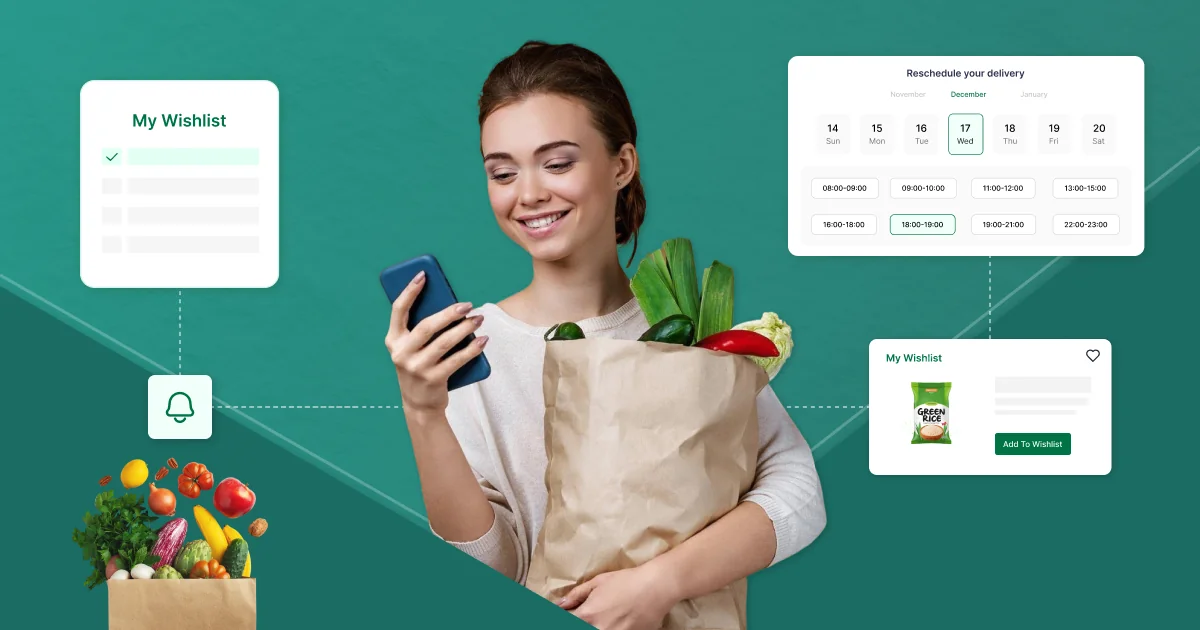
This ultimately improves engagement and boosts revenue. When a family is going to run out of particular products, predictive algorithms can identify it and automatically create reminders to place new orders.
To provide clients with curated product recommendations, smart basket suggestions, and dynamic pricing, we help deliver a tailored experience. With the help of AI-driven tools we help your brands to ensure a better experience across all touchpoints.
Fulfillment Efficiency and Optimization
With the e-grocery segment, fulfillment efficiency directly relates to profitability. Delivery speed, slot availability, and product freshness are the three legs on which customer satisfaction stands.
The next wave of innovation will be micro-fulfillment centers and “dark stores” that can cut delivery times, along with operational costs. According to Bain & Company, automated micro-fulfillment could cut as much as 40% off order processing costs.
The technology enables the retailer to route the order intelligently to the nearest store or hub, keeping in view the stock level, traffic pattern, and demand for delivery. Quick commerce, scheduled deliveries, and optimized logistics-all three will be supported by the hybrid model for an improved customer experience.
Digital Solutions for the Connected Grocery Ecosystem
With grocery retail having moved completely online, the focus is on comprehensive digital solutions for groceries that link everything from product sourcing to last-mile delivery.
These will be the integrations-all coming in from the web, app, and stores in real time-that are going to hold the key for successful grocery operations in 2026.
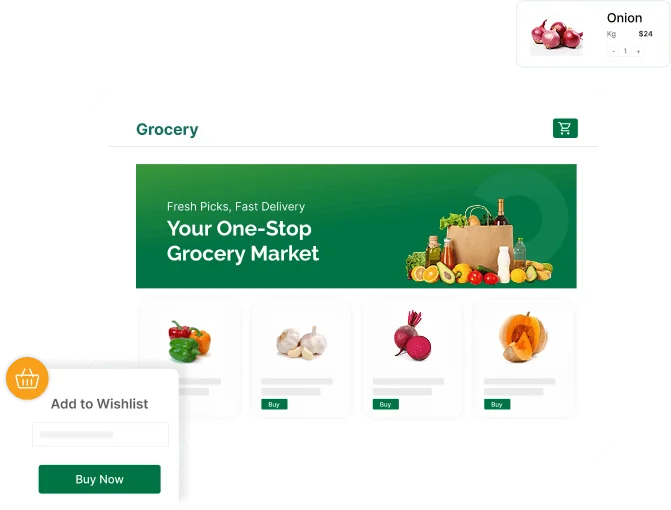
Everything will happen on one unified grocery ecommerce platform: inventory management, loyalty management, promotion management, analytics management.
They believe that the digital transformation of Grocerzy’s customers is to move away from transactional electronic commerce to an intelligent ecosystem that responds dynamically to every consumer’s need. This is not a website; this is a fully integrated experience engine driven by data.
Sustainability is a Priority
Consumer behavior is transformed over time. Today’s customers are more aware of nature and look for a product that is sustainable. Therefore, they go to the root of the product development to ensure they are helping nature towards sustainability.
This makes the need for integrating a sustainable practice for the entire product development starting from supply chain, to eco-friendly packaging to clear online sourcing information.
By 2026, “farm-to-shelf distance” and “recyclable packaging” will be among the common sustainability indicators on product detail pages. Grocery allows retailers to expose such attributes through structured product metadata so that shoppers can make a more conscious choice, hence adding more credibility to the brand.
The Power of Mobile App Experiences
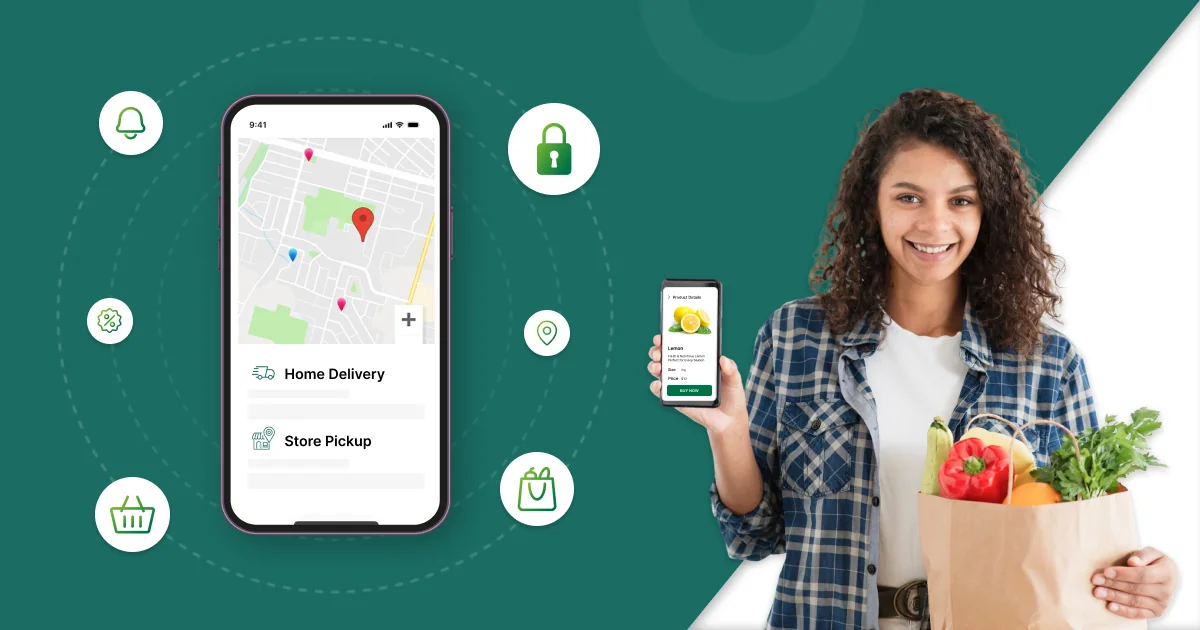
Websites are still essential for large-basket orders and discovery, but mobile apps for supermarkets are the lifeline of grocery shopping and customer loyalty.
With the help of voice-assisted ordering, one-tap checkout, and instant access to past baskets today’s consumers are getting higher convenience. Using proper Grocery ecommerce strategies can help to make the implementation better by doing data-backed analysis and real solutions.
Grocerzy ensures that mobile experiences mirror the capabilities of the site with integrated loyalty, synchronized lists, and contextual recommendations in a single, seamless omnichannel experience.
Seamless checkout & innovative payment
Payment flexibility has remained the top driver of consumer trust. By 2026, consumers will expect one-click payments, wallet integrations, and instant refunds, while a rise in embedded BNPL options and loyalty-linked discounts drives checkouts into truly modern territory.
For example, one study by Insider Intelligence says 60% of shoppers prefer merchants who can offer them fast and secure payment experiences.
These are likely to lower cart abandonment and raise repeat purchases. In this regard, the Grocerzy ecosystem is integrated with cross-regional payment APIs for securely enabling cards, UPI, wallets, and BNPL methods toward true cross-channel convenience.
Predictive Analytics to Smarter Inventory and Demand Forecasts
With groceries having notoriously thin margins, predictive analytics reduces wastage and optimizes stock for retailers. More specifically, modern machine learning tools analyze weather, holidays, promotions, and local buying trends to give uncannily accurate forecasts of demand.
By 2026, with the help of predictive systems, the demand can be automatically adjusted procurement and pricing strategies in real time.
Omnichannel retail is now the new normal
The future of grocery isn’t “online versus offline.” It’s both. Consumers may order items to be delivered at home for their pantries while picking up fresh produce in-store.
This process can be done with the same payment mode, loyalty points and wallet across all the channels. The best part about the omnichannel is it delivers unified commerce systems that can synchronize prices, offers, and availability everywhere.
With the help of Grocerzy pre-built grocery store software, your brand can implement an omnichannel practice with ease to ensure brand consistency across web, mobile, and physical stores.
Future of E-Grocery
The grocery industry is shifting and growing by 2026 and beyond. The future of success in e-grocery is now based on three crucial pillars: adaptability, integration of data, and customer experience.
This is where the need for AI-powered retailers comes into the story. It helps to automate order fulfilment, deliver personalized experience and build trust through sustainability to capture loyalty.
In the next implementation, the grocery industry will include AR-assisted shopping to integrate better and smarter. With the help of drone-based deliveries, the industry will witness a better experience.
At the core is digital agility is now more about better updating, personalizing, and faster fulfilling than the competition.
Connecting with platforms like Grocerzy can lead the changes in enabling grocery retailers to operate with precision, scalability, and sustainability.
Final Note:
In the world of e-groceries in 2026, it’s all about intelligent automation, integrated ecosystems, and hyper-personalized journeys. That retailer will shape the future of online grocery retail by investing in a robust online grocery store website and the tools that come with it.
Whether through digital grocery solutions providers, modular prebuilt software, or even just a feature-rich mobile app for supermarket, at the core of innovation and customer-centric design lies much more than that.
Thus, grocery retailers can continue providing convenience, transparency, and trust in today’s digital-first world with partners like Grocerzy.

Jaydeep
👋 Hello! I'm Jaydeep , passionate about driving innovation and transformation in Digital Commerce, Digital Transformation, User Experience, E-commerce, Adobe Solutions, and Apps. I'm on a mission to help organizations thrive in the digital age for Grocery Solutions.