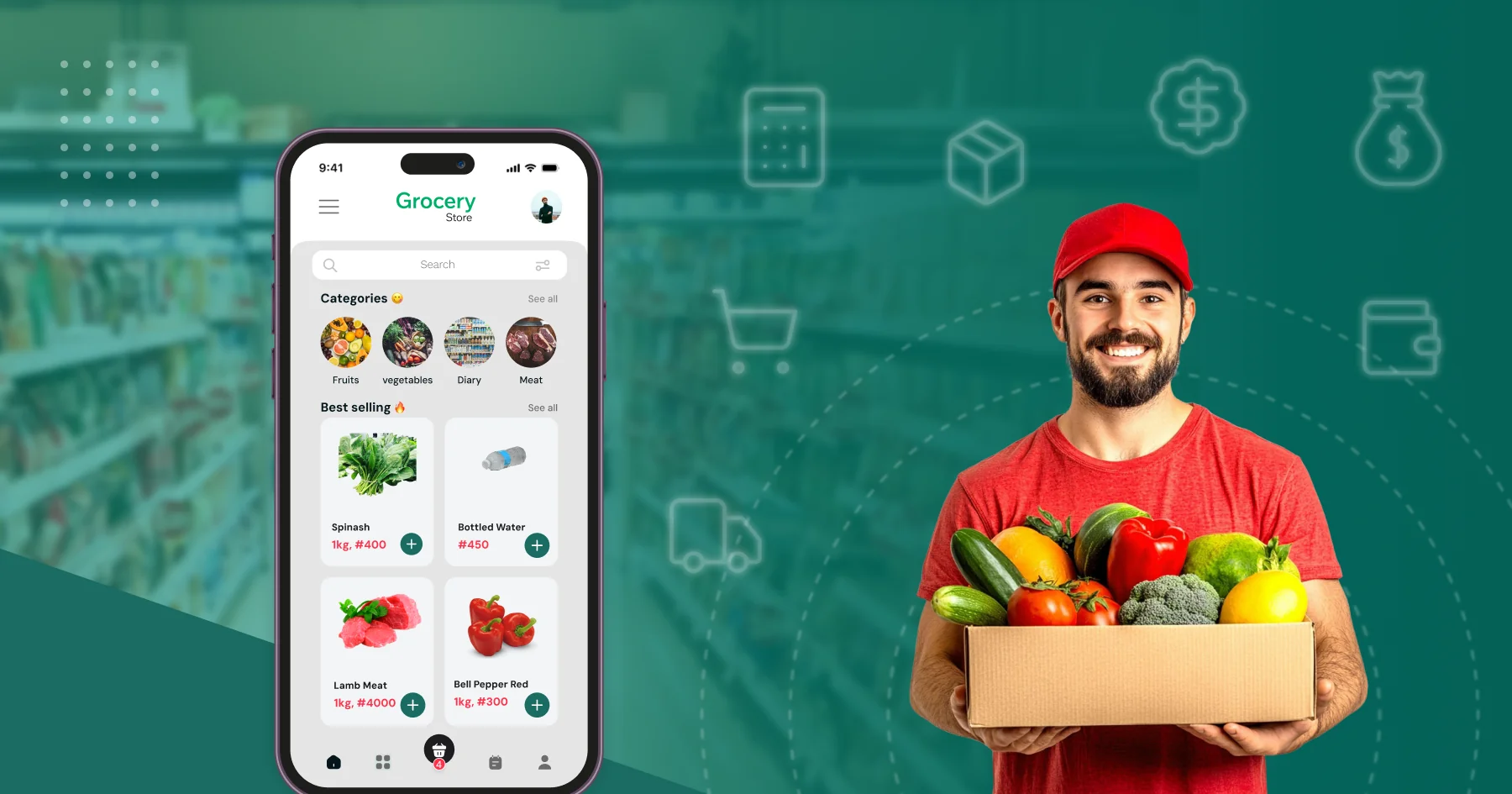
AI in Grocery Stores: How AI is Transforming Retail Business
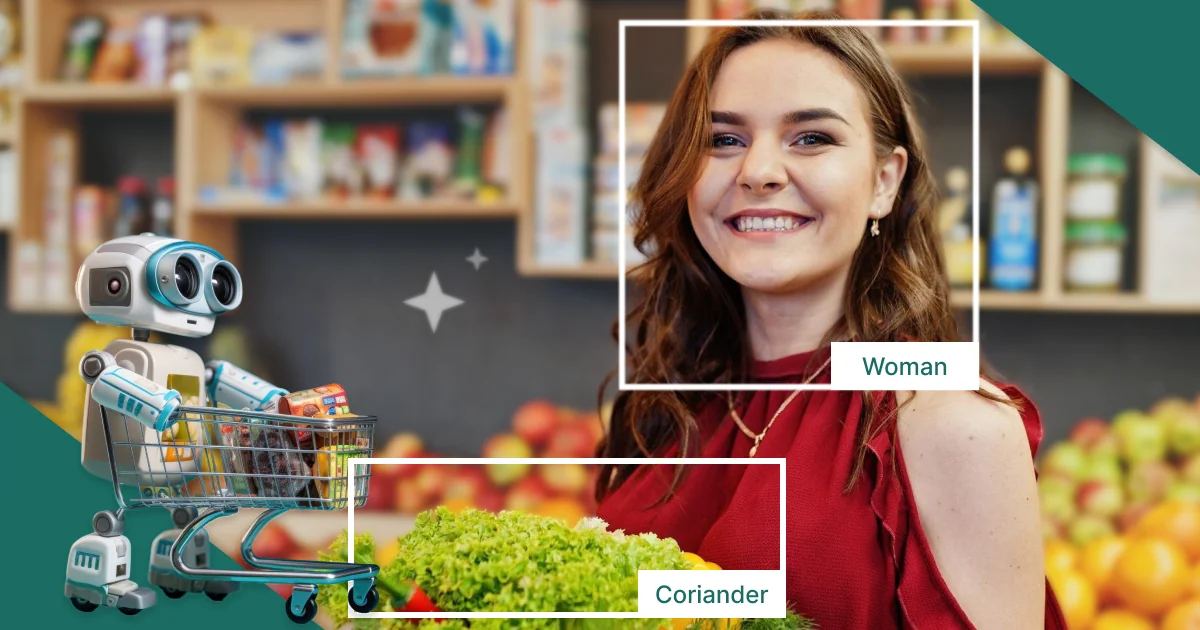
A grocery aisle is no longer just the physical space with shelves and checkout lines — it is data, prediction, and personalized experiences that AI powers.
What used to be simple in-store transactions have now become a channel for grocery stores to compete, grow, and build relationships with customers through AI-driven solutions such as faster inventory decisions and smooth online shopping.
In this article, we break down the biggest use cases, measurable benefits, and how Grocerzy can adopt the best grocery ecommerce platform to win in both physical and digital channels.
Why AI matters for grocers today
Retailers that embed AI into grocery stores unlock efficiency and growth. Recent industry research finds that many retailers are already piloting or scaling generative and other AI solutions.
64% of retail leaders reported running gen-AI pilots, and a meaningful share are scaling these solutions in value-chain areas like customer service and operations.
Another sector-specific estimate projects AI could unlock roughly $136 billion of value across the grocery sector by 2030, with major gains in supply chain and merchandising — a direct signal that investing in supermarket ecommerce platform capabilities and AI-driven supply tools is no longer optional.
Concrete use cases: where Grocerzy should start
Demand forecasting & inventory optimization:
Knowing the past sales, promotions, and also taking into consideration the seasonality, weather, and local trends, AI models can forecast demand up to 5 times more accurately than manual methods.
The effect of this is keeping Grocerzy in a position to satisfy customer demand for the most popular SKUs while also reducing losses due to the spoilage of products — this is both a win for margins and for sustainability. Oracle and industry implementations are a good example of how inventory can be improved significantly when forecasting and allocation are done by AI.
Personalization & recommendation engines:
Consumers utilizing the Grocerzy online grocery shopping platform desire the system to provide them with suggestions that are in line with their family and dietary habits. The use of AI-powered product suggestions, customized offers, and email/push personalization contributes to the increase of the basket size and the frequency of repeat purchases.
Frictionless checkout & in-store automation:
Computer-vision carts, cashierless checkouts, and smart shelving reduce friction and labor costs. These technologies also feed data back into systems for improved assortment planning.
Dynamic pricing & markdown optimization:
AI can dynamically adjust prices or mark down items with low velocity to reduce waste and maximize sell-through, an especially important lever for perishables.
Operational automation & workforce enablement:
By using chatbots and AI assistants, store communication, shift planning, and customer service can be made more efficient, thus staff can be more engaged with customers rather than being occupied by performing repetitive tasks.
In 2024, grocery operators have signaled that they are using AI to improve communication, forecasting, and operations. AI-powered chatbots assist communication between staff and customers, generating enormous volumes of emails in a comfortable and agile manner.
AI has also played a role in operational activities like ordering and inventory management through the use of predictive analytics, where demand forecasting has been increasingly accurate and reliable.
Selecting the right grocery eCommerce solution
- When Grocerzy evaluates platforms, aim for a stack that combines a robust grocery platform with AI capabilities (forecasting, personalization, search relevancy) and mobile-first delivery workflows. Look for:
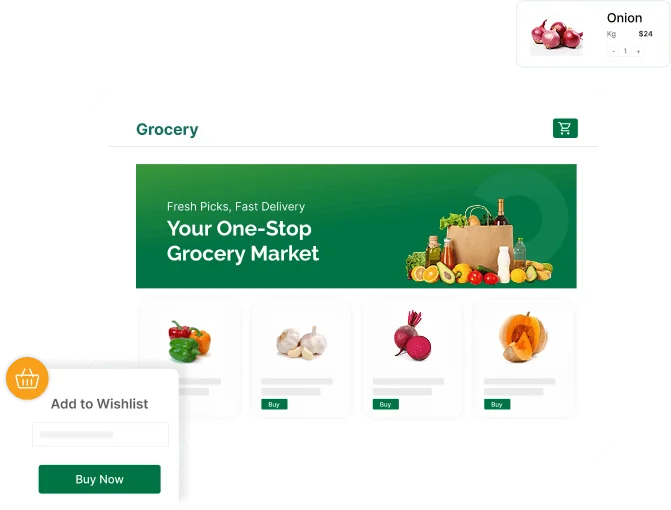
- Rapid time-to-market with a ready to use online grocery website template and modular integrations.
- Grocery-specific features with native support: slot-based delivery scheduling, complicated substitution rules, perishable product management, and multistore inventory visibility.
- Built-in AI modules or smooth API connections to the best third-party AI engines so Grocerzy can add demand forecasting, dynamic merchandising, and personalization without heavy custom builds.
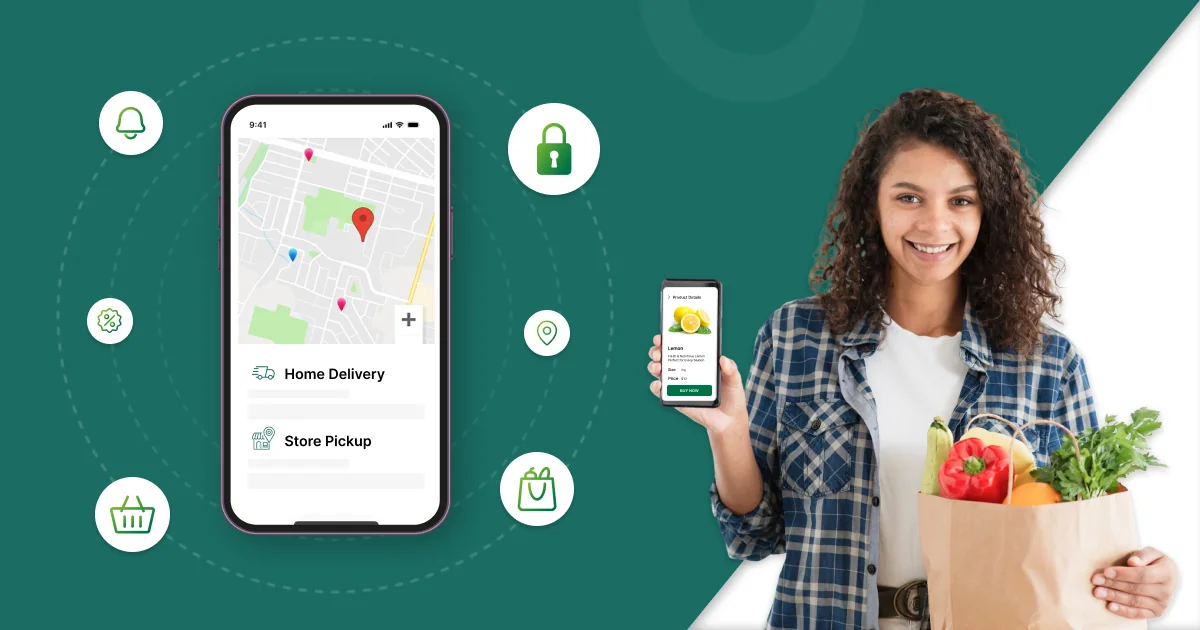
- A scalable grocery delivery app solution to meet customers where they shop on phones.
Worldwide eCommerce trends are loud and clear about the need for online grocery sales that have skyrocketed during the pandemic and are still increasing, with forecasts indicating that they will keep growing at double digits annually in several markets.
A combined top-optimized ecommerce grocery platform is an excellent investment for Grocerzy to be able to meet the online demand in a quick and efficient way.
Measuring ROI: the numbers that matter
Retailers are seeing measurable returns from AI investments. A 2024/2025 industry report showed a meaningful portion of retailers have adopted AI in some form (42% already using AI with another large share piloting initiatives), and larger retailers often lead adoption — a trend grocery business can follow by starting with high-impact pilot projects.
Key KPIs Grocerzy should track:
- Reduction in stockouts and spoilage (units and %)
- Increase in average order value and repeat purchase rate
- Reduced labor hours per store (through automation)
- Conversion rate uplift on the online grocery store website and mobile app
- Delivery fulfillment time and on-time performance for the grocery delivery app solution
Implementation roadmap for Grocerzy
- You can start with a small plan, demonstrate the worth – just choose one high-impact use case (for instance, demand forecasting for perishables) and incorporate an AI forecast model with your merch and replenishment flows. Track waste and fill rates for 60–90 days.
- Pick a platform with extensibility, choose a grocery eCommerce platform that supports headless APIs so Grocerzy can add AI features and swap providers without replatforming.
- Mobilize the customer experience, launch a grocery eCommerce mobile app and progressive web storefront for immediate reach; use a ready to use online grocery website template to accelerate launch.
- Operationalize insights, connect AI outputs to store dashboards and the supply chain. Ensure buyers and store managers can act on AI recommendations.
- Scale with governance, as Grocerzy expands AI across pricing, personalization, and operations, keep oversight on data quality, bias checks, and clear ROI gates.
Customer-facing opportunities
AI not only optimizes backend operations, it creates delightful customer experiences. Relevant features Grocerzy can roll out include:
- Smart subscription reorders based on household consumption.
- Voice or chat shopping assistants inside the grocery eCommerce mobile app.
- Relevant push offers and recipe suggestions tied to what’s in the customer’s cart.
- These enhancements transform the buyer’s experience from a place to buy groceries into a helpful daily shopping companion.
Risks & how Grocerzy should mitigate them
- AI projects can fail if data is poor or teams don’t change processes. Grocerzy should:
- Clean and centralize master product and inventory data first.
- Run clear pilots with measurable KPIs.
- Train teams to understand AI results (humans + models).
- Keep customer data safe and give clear information about personalization and privacy.
The future: omnichannel grocery powered by AI
AI is transforming grocery retail into a never-ending feedback loop: customer interactions are used to train models, models guide merchandisers and store operations, and improved operations result in improved customer experiences.
For Grocerzy, the use of an advanced grocery ecommerce solution powered by AI translates into quicker delivery, fresher product mixes, more accurate pricing, and increased customer loyalty.
Numerous industry reports and retailer surveys point out one thing only: those who are first to integrate AI in supply chain, personalization, and commerce will be the ones to increase their market share the most over the next few years.
Wrapping Up – A Practical Call to Action for Grocerzy
AI in Grocery Stores is not an abstract trend- it’s a toolkit for reducing waste, boosting sales, and delivering convenience.
Grocerzy can capture immediate returns by choosing the best grocery ecommerce platform that offers modular AI features, launching a ready to use online grocery website and scalable grocery eCommerce mobile app, and focusing first on inventory forecasting and personalization pilots.
Start small, measure impact, then scale- and Grocerzy will not only keep pace with changing shopper expectations but lead the next generation of grocery retail.

Jaydeep
👋 Hello! I'm Jaydeep , passionate about driving innovation and transformation in Digital Commerce, Digital Transformation, User Experience, E-commerce, Adobe Solutions, and Apps. I'm on a mission to help organizations thrive in the digital age for Grocery Solutions.